Noto
A desktop Markdown editor where you type into the formatted page, and saving leaves every byte you did not touch exactly as it was.
- Unit tests
- 3,320
- Packaged end-to-end tests
- 435
- Platforms
- 3
RoobLiProjects
Things built, each with its status, its figures and a log of what changed.
A Markdown editor of my own with its engine and its memory layer, and the Typora plugins and theme that came before it.
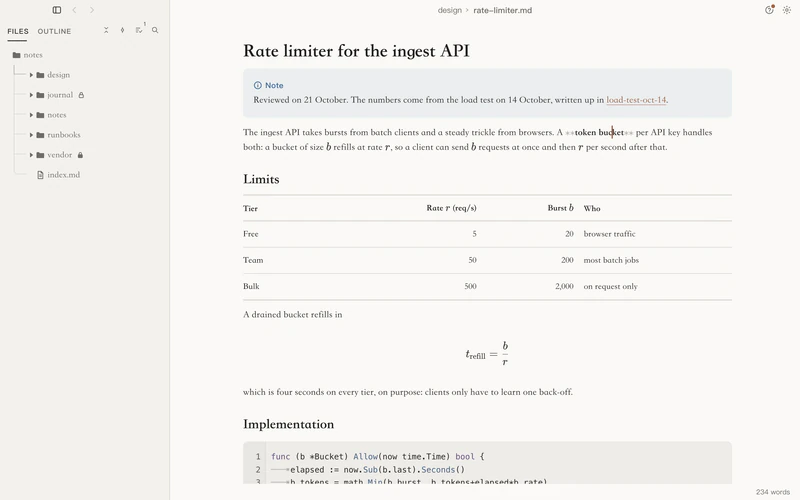
A desktop Markdown editor where you type into the formatted page, and saving leaves every byte you did not touch exactly as it was.
A Markdown engine that splits a document into blocks with exact positions, so an editor re-reads only what changed and saves without rewriting the rest.
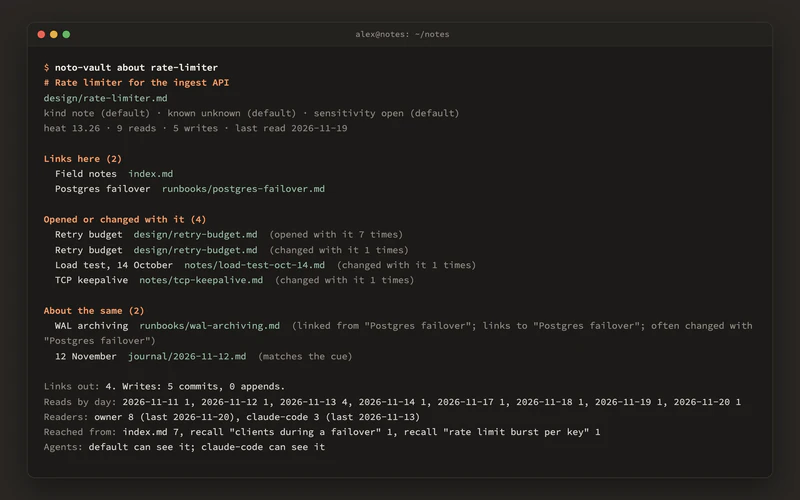
A folder of Markdown notes kept as memory that a person and their agents share, with one link resolver, a record of what was read, scoped keys and proposals a person accepts.
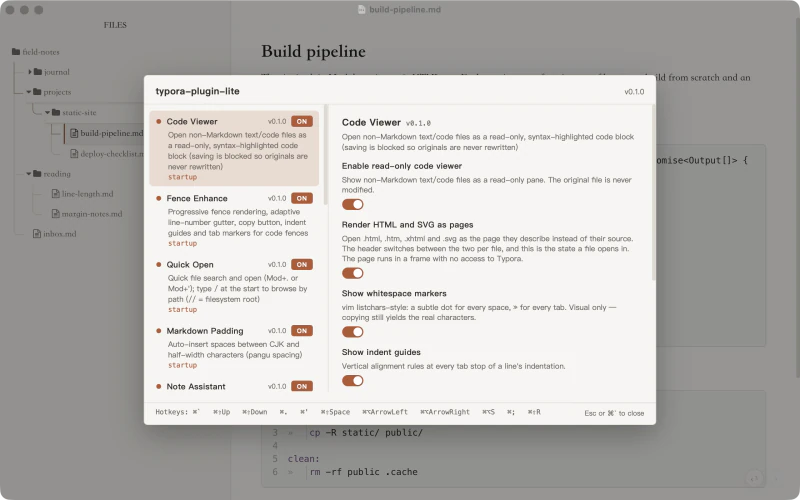
A small plugin system for Typora that also works on macOS, where Typora is a native WebKit app rather than Electron, with a loopback control surface that scripts and agents can drive.
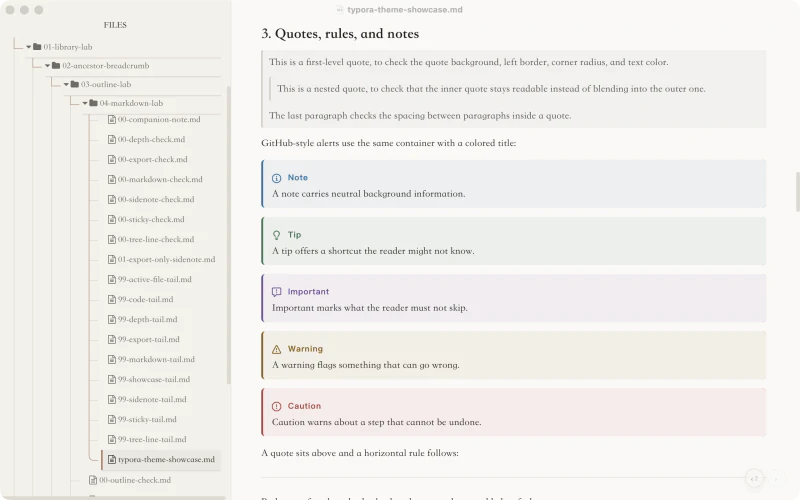
A light and dark Typora theme in warm paper tones with one accent colour, carried through the file tree, the outline, code, sidenotes and exported pages.
Tools for a working terminal, most of them for running Claude Code, Codex and pi side by side.
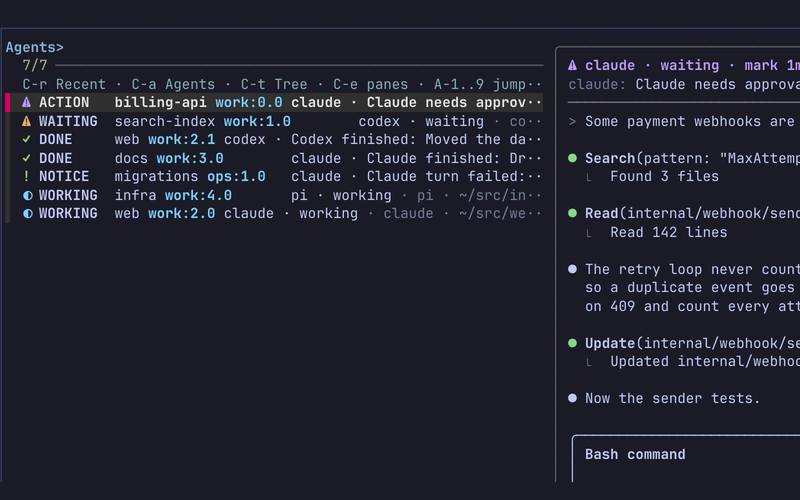
A window-first tmux switcher that also tells you which coding-agent pane needs you while you are looking somewhere else.
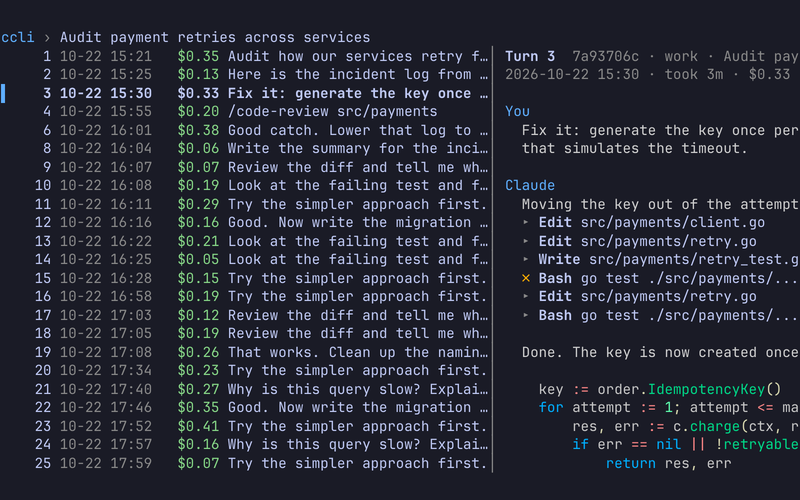
A terminal tool that shows what every Claude Code, Codex, Pi and Cursor session on your machine used and cost, turn by turn, across several accounts.
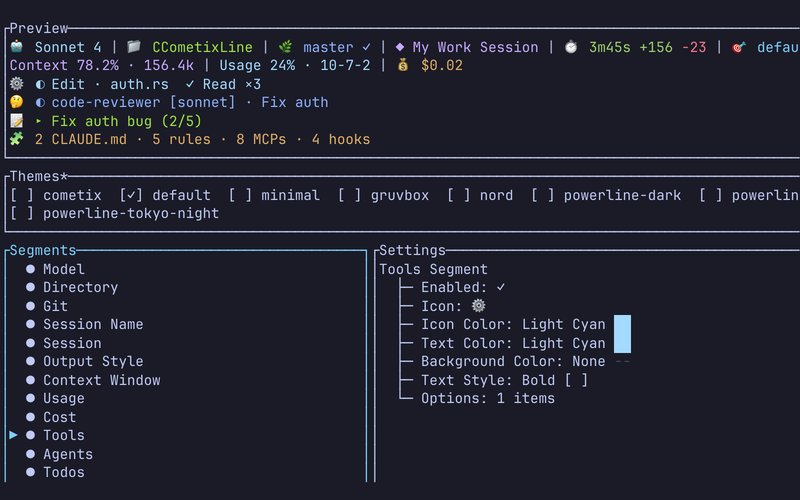
A fast Claude Code statusline in Rust, extended with seven more segments, Codex, Kimi and pi support, and usage read per account.
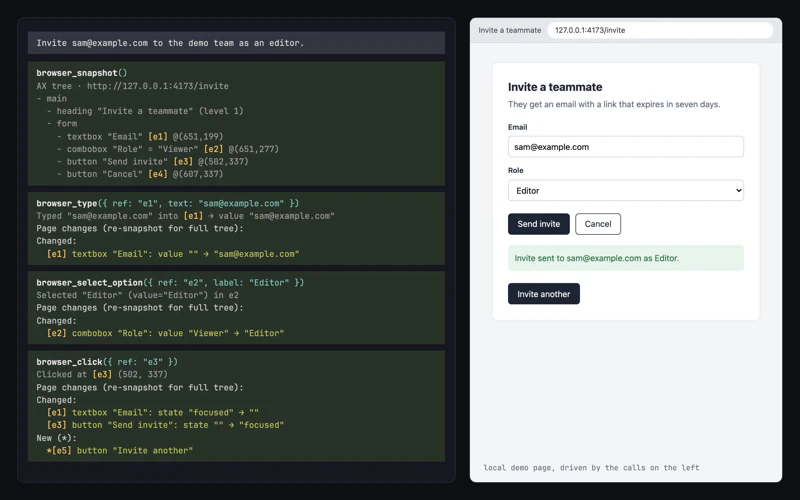
A pi extension that drives the Chrome you already use, by accessibility refs instead of pixels, with a fork that borrows your tabs only with your approval and keeps agent tabs in the background.
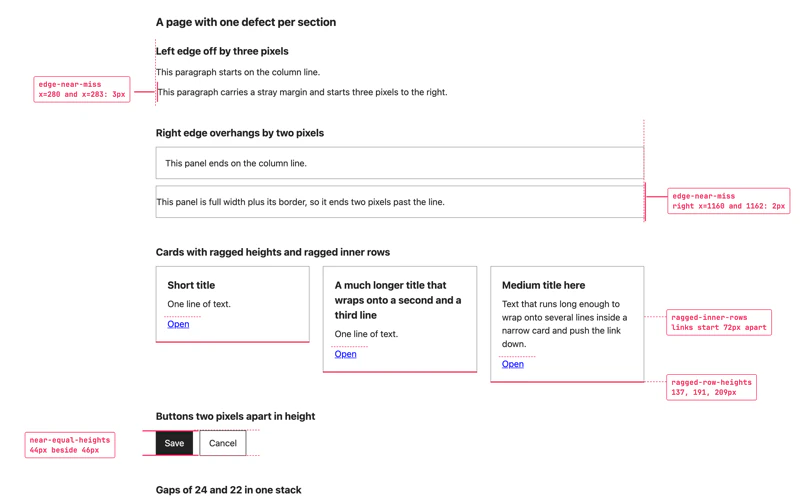
Two agent skills for Claude Code, Codex and pi: one routes product and interface work through the right depth of thinking, one measures the rendered page and reports every edge that is off by a few pixels.
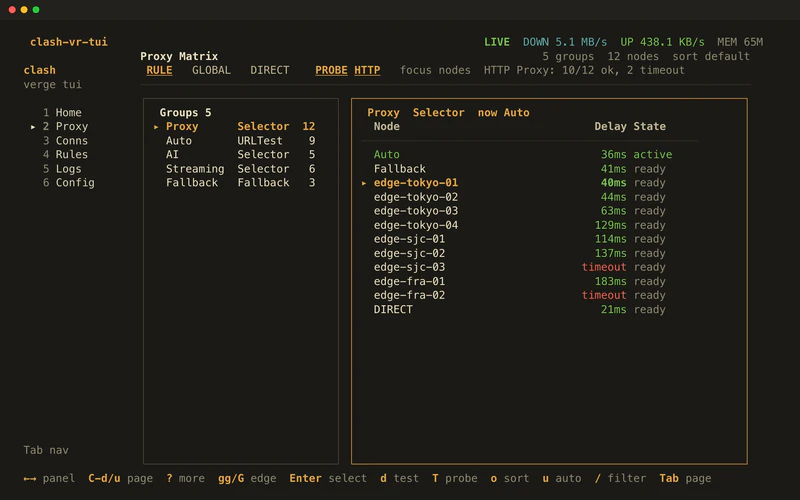
A terminal UI and command line for the mihomo core behind Clash Verge Rev, with a doctor that checks the whole path from controller to internet and says what to fix.
Courses and workbenches where you run the real thing instead of reading about it.
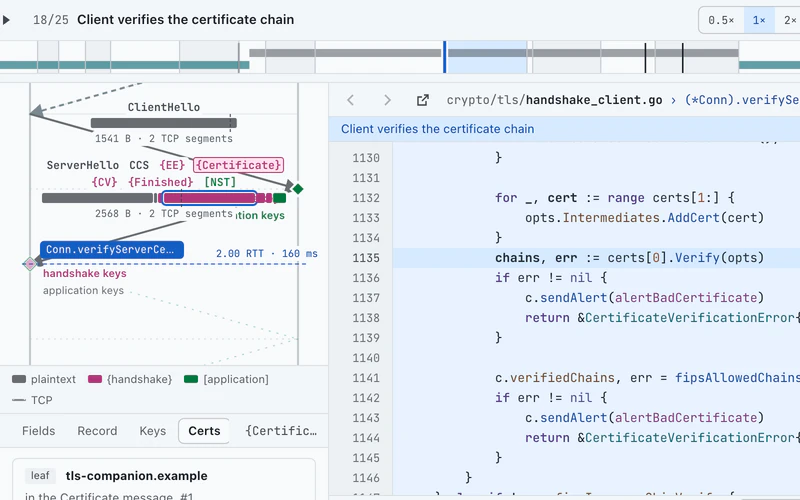
A workbench that replays real Go crypto/tls handshakes step by step, with the bytes, the key schedule, the Go source that ran and the RFCs kept side by side.
Latest in the log: Eight CA keys that fit in one byte
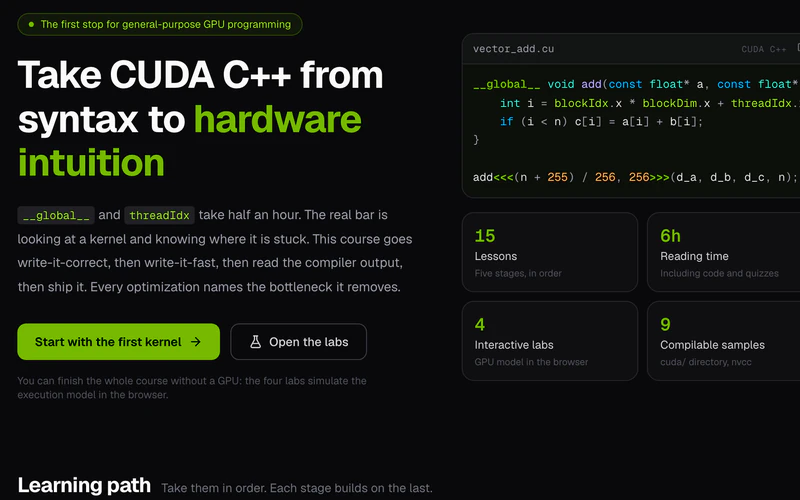
Fifteen lessons and four in-browser GPU labs. English default, Chinese at /zh/. Finish without a local GPU; nine CUDA samples when you have one.
Latest in the log: Shared memory and the bank conflict